18 Aug 2026
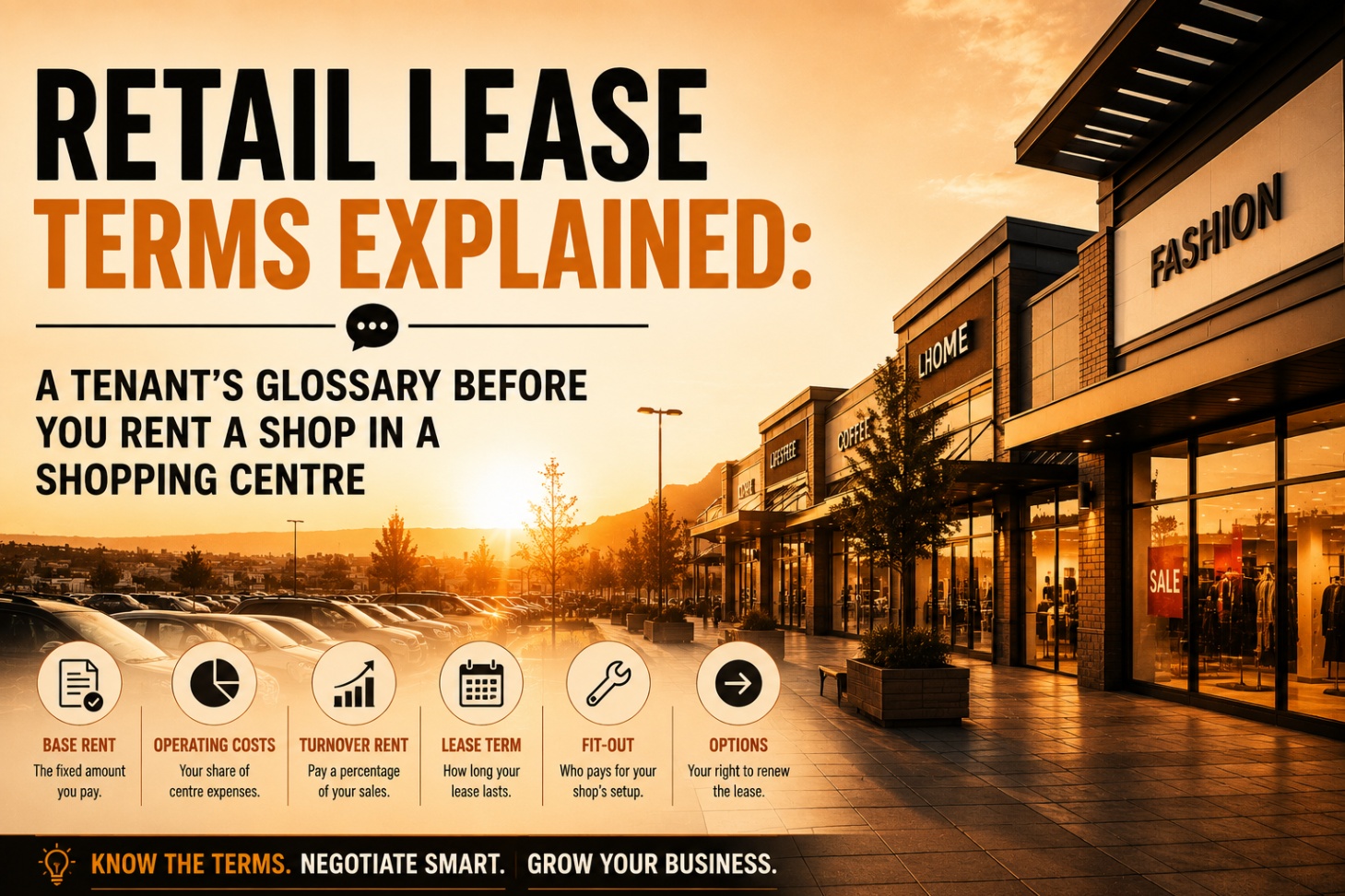
Retail Lease Terms Explained: A Tenant's Glossary Before You Rent a Shop in a Shopping Centre
Space & Measurement Terms
GLA (Gross Lettable Area): The total floor area you're contracted to lease, including a proportionate share of common areas such as walkways, shared ablutions and passages. Your base rental is almost always calculated on GLA, not the space you can actually use.
NLA (Net Lettable Area): The usable floor area exclusive of shared spaces — effectively the space you can trade in day-to-day. A large gap between GLA and NLA means you're paying rental on space you can't actually use for stock or customers.
Common Area: Shared spaces within the centre — walkways, parking, public ablutions, and shared entrances — maintained by the landlord and paid for by tenants via a levy.
Beneficial Occupation: The period during which you occupy the premises to fit out your shop before you officially start trading. Rent may be reduced or waived during this period, but this must be specified in the lease.
Financial Terms
Base Rental: The fixed minimum rental amount payable each month, calculated on GLA, before any turnover-based top-up applies.
Escalation Clause: The contractual annual increase applied to your base rental. South African retail leases typically escalate at 8–10% per year — confirm the exact percentage and when it first applies.
Turnover Rental: An additional rental amount calculated as a percentage of your monthly sales turnover, on top of (or sometimes in place of) base rental. Common in larger shopping centres and requires you to submit turnover figures to the landlord.
Operating Costs / Levies: Your proportionate monthly contribution toward running the centre — cleaning, security, common area electricity, centre marketing and management. Always ask for a breakdown and recent history of levy increases before signing.
Tenant Installation Allowance (TI Allowance): A cash or rental-free contribution from the landlord toward your shopfitting costs. This is negotiable and often not offered upfront — ask for it directly.
Deposit and Guarantee: Security held by the landlord against default, usually equal to one to three months' gross rental. May take the form of a cash deposit, bank guarantee, or suretyship from a director or holding company.
VAT: Value-Added Tax, currently levied on commercial rentals in South Africa. Confirm whether quoted rentals are VAT-inclusive or exclusive before comparing offers.
Legal & Contractual Terms
Lease Term: The fixed duration of the lease, typically three to five years for retail. Shorter terms offer flexibility; longer terms often unlock a better rental rate or TI allowance.
Renewal Option: A tenant's right to extend the lease beyond the initial term at pre-agreed conditions, usually requiring written notice within a specified window before expiry.
Breach Clause: The conditions under which either party is considered in default — commonly late payment, unauthorised alterations, or trading outside permitted hours — and the remedies available, including cancellation.
Cession: The formal transfer of a lease agreement from one tenant to another, such as when a business is sold. Landlord consent is almost always required.
Sub-letting Clause: Governs whether you may let part of your premises to another business (common with shop-in-shop arrangements) and under what conditions the landlord must approve this.
Restraint of Trade / Exclusivity Clause: A clause preventing the landlord from leasing to a directly competing business elsewhere in the same centre. Valuable for anchor and specialist tenants — always worth negotiating for.
Co-Tenancy Clause: Protects a tenant's rental obligations if a key anchor tenant (such as the supermarket) vacates the centre, often allowing a rental reduction until the anchor is replaced.
Operational Terms
Trading Hours Clause: Specifies the minimum (and sometimes maximum) hours you're required to trade, set by the centre management to maintain consistent customer experience across all tenants.
Signage Rights: Your entitlement to shopfront and directory signage, including size, position and illumination restrictions. Confirm this is documented — verbal assurances from a leasing agent aren't enforceable.
Parking Bay Allocation: The number of parking bays assigned to your premises or available to your customers, sometimes shared with other tenants. Low allocation can directly cap your trading potential.
Anchor Tenant: The major drawcard tenant in a centre — typically a supermarket, pharmacy, or large retailer — whose presence drives footfall for every other tenant.
Trading Density: Sales turnover per square metre, the metric landlords use to benchmark tenant performance and set turnover rental thresholds.
Public Liability Insurance: Insurance most landlords require tenants to hold, covering injury or damage claims arising from your operations within the centre.
Why These Terms Matter Before You Sign
Understanding this vocabulary before you negotiate puts you in a stronger position at the table. A prospective tenant who can query the GLA-to-NLA ratio, ask pointed questions about co-tenancy protection, or negotiate a tenant installation allowance is far less likely to sign a lease that quietly erodes their margins over the following three to five years.
If a term in your lease isn't covered above, don't sign until you've had it explained in writing — verbal clarifications from a leasing agent carry no legal weight once the lease is signed.
Frequently Asked Questions
What is the difference between GLA and NLA in a retail lease?
GLA (Gross Lettable Area) includes your proportionate share of common areas and is what your rental is calculated on. NLA (Net Lettable Area) is the usable space you can actually trade in. Always confirm both figures before comparing rental rates between properties.
What is a normal escalation rate for a retail lease in South Africa?
Most South African retail leases escalate base rental by 8–10% per year. Confirm this rate is fixed and stated in the lease rather than left open to renegotiation.
Can I negotiate a tenant installation allowance?
Yes. A TI allowance is rarely offered proactively and is one of the most commonly under-negotiated items in a retail lease — always raise it directly, particularly for longer lease terms.
What is a co-tenancy clause and do I need one?
A co-tenancy clause protects your rental obligations if a major anchor tenant vacates the centre. It's particularly valuable for smaller tenants whose footfall depends heavily on a specific anchor, such as a supermarket or pharmacy.
Looking to rent a retail shop in a shopping centre on the East Rand? Fox & Co Realty can walk you through the lease before you sign — get in touch for available retail space
