25 Aug 2026
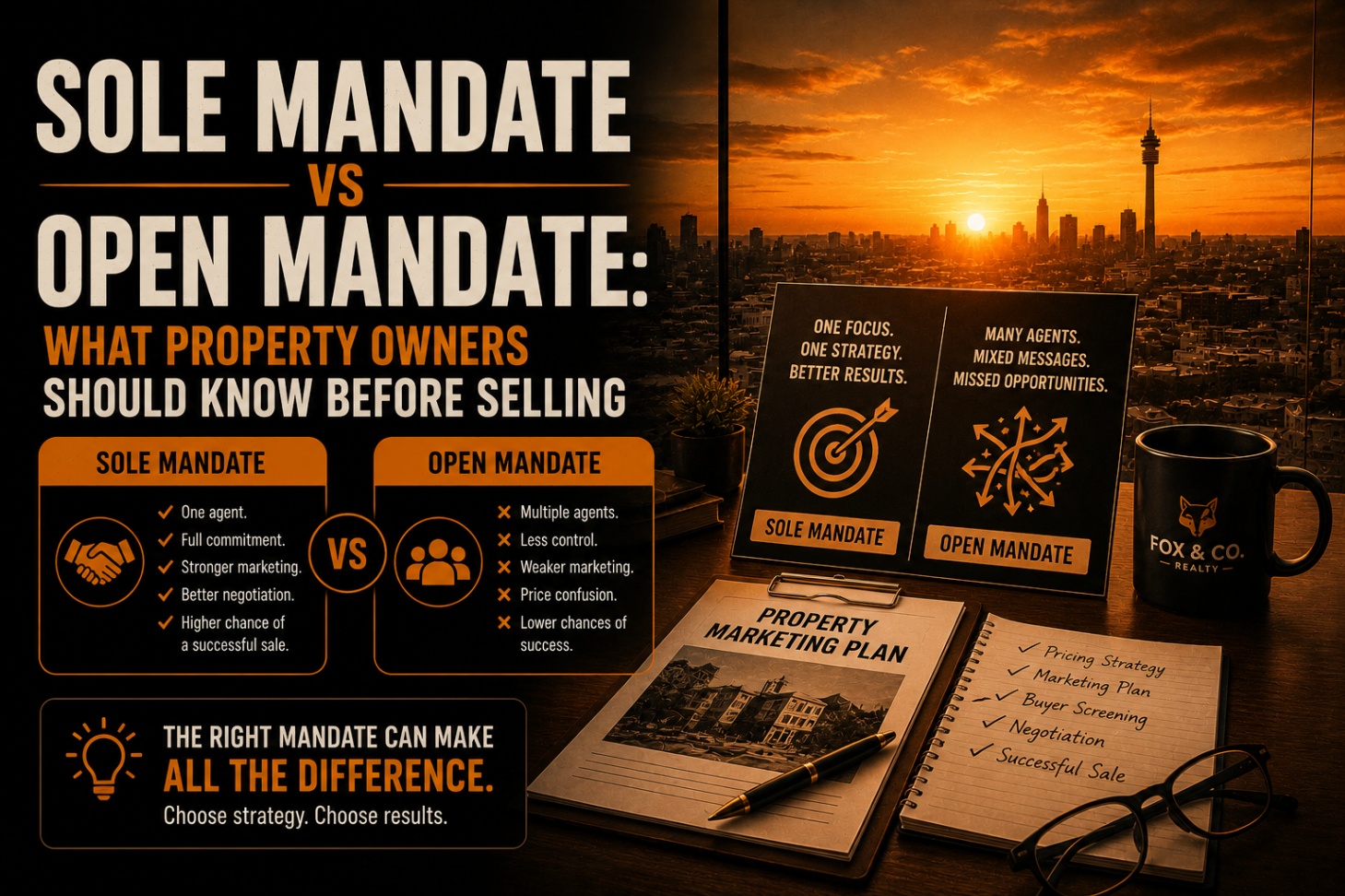
Sole Mandate vs Open Mandate: What Property Owners Should Know Before Selling
There's a persistent belief among property sellers that goes something like this: if one agent marketing your property is good, five agents marketing it must be five times better. It's an understandable instinct — more agents, more buyers, more chances of a sale, right? Unfortunately, this is a bit like assuming five chefs in one kitchen will get dinner on the table faster. In practice, you usually end up with a mild kitchen fire, a lot of finger-pointing, and dinner arriving cold.
The mandate you sign — sole or open — shapes almost everything about how your property gets marketed, who invests real effort into selling it, and ultimately how much you walk away with. Here's what property owners actually need to understand before choosing one.
What a Mandate Actually Is
A mandate is simply the legal agreement authorising an estate agency to market and sell your property on your behalf. It sets out the agency's authority, the commission structure, the marketing commitment, and — critically — whether you're appointing one agency exclusively or opening the door to several at once. Every property sale in South Africa starts here, and the type you choose has more influence on your outcome than most sellers realise
Sole Mandate: One Agent, Full Commitment
A sole mandate appoints a single estate agency as the exclusive representative for your property, typically for a fixed period of 8 to 12 weeks. During that time, no other agency is authorised to market or sell the property — though the owner can usually still sell privately, depending on the wording of the agreement.
The trade-off is straightforward: in exchange for exclusivity, the agency commits real resources to your listing. Professional photography, proper signage, paid advertising, database marketing, and — perhaps most importantly — a genuine incentive to prioritise your property over every other listing on their books, because they know the commission is theirs if it sells.
Why Agents Work Harder Under a Sole Mandate
• Guaranteed commission on a successful sale removes the risk of investing marketing spend only for a competitor to close the deal
• Agencies are far more willing to fund professional photography, drone footage, and paid digital advertising when the mandate is exclusive
• A single point of contact means consistent pricing, messaging and buyer communication — no conflicting information from five different agents
• Serious agents prioritise sole-mandate listings over open ones when allocating their time, simply because the return on effort is certain
Open Mandate: Many Agents, Divided Attention
An open mandate authorises multiple agencies to market the same property simultaneously, with commission going only to whichever agency actually secures the buyer. On paper, this looks like more exposure. In practice, it tends to produce the opposite result.
Because no agency is guaranteed a return on the time and money they invest, most treat open-mandate listings as a lower priority — added to a general listings pool rather than actively marketed with any real budget behind them. Why would an agency pay for professional photography or a paid ad campaign on a property that a competing agency might sell first?
The Hidden Costs of an Open Mandate
• Multiple agencies often list the property at different prices, confusing buyers and undermining credibility in the market
• Buyers frequently see the same property advertised repeatedly by different agents, which can create an impression the property is struggling to sell — even early in the process
• With no guaranteed commission, few agents invest in premium marketing, professional photography, or paid promotion
• Coordinating viewings and offers across several agencies increases the chance of miscommunication or duplicated effort

So Why Do Sellers Still Choose Open Mandates?
Usually for one of two reasons: a belief that more agents automatically means more buyers, or previous experience with an agent who didn't perform, leading the owner to hedge by spreading the listing around. Both are understandable — but neither addresses the actual problem. If an agent underperforms on a sole mandate, the fix is choosing a better agent next time, not diluting everyone's incentive to try.
There is one legitimate case for an open mandate: highly generic, high-demand stock in a strong market, where a property will likely sell quickly regardless of marketing effort. For most commercial and retail property — where buyers are fewer, deals are more complex, and presentation genuinely matters — a sole mandate consistently outperforms.
What to Negotiate Into a Sole Mandate
Agreeing to a sole mandate doesn't mean handing over a blank cheque. Before signing, property owners should clarify:
• The mandate period — typically 8 to 12 weeks, with a clear review point if the property hasn't sold
• What specific marketing the agency commits to — professional photography, signage, online listings, and any paid advertising
• The commission structure and whether it's negotiable based on the marketing investment offered
• Whether the owner retains the right to sell privately without paying commission, and under what conditions
• Reporting frequency — how often you'll receive feedback on viewings, enquiries and market response
The Bottom Line
A sole mandate isn't about limiting your options — it's about giving one agency a genuine reason to make your property their priority. An open mandate might feel like it's casting a wider net, but in reality it usually means no single agency is fully invested in landing the catch. For commercial and retail property owners looking to sell efficiently and at the right price, a well-negotiated sole mandate, with a competent agency held accountable to real marketing commitments, remains the more reliable path.
Frequently Asked Questions
Is a sole mandate legally binding for the full period?
Yes, for the agreed mandate period — typically 8 to 12 weeks — the appointed agency has exclusive rights to market and sell the property, subject to the specific terms of the signed agreement.
Can I sell my property privately during a sole mandate?
This depends entirely on the wording of the mandate agreement. Some sole mandates allow the owner to sell privately without commission being due; others don't. Always clarify this in writing before signing.
Does an open mandate mean I'll sell faster because more agents are involved?
Not usually. Because no agency is guaranteed commission under an open mandate, most invest less in marketing and prioritise sole-mandate listings ahead of open ones, which frequently results in a slower sale despite the wider listing spread.
What happens if my property doesn't sell during a sole mandate period?
Most sole mandates include a review point at the end of the agreed period, at which the owner can renew with the same agency, renegotiate terms, or choose a different agency going forward.
